‘I Love Boosters’ Review: Keke Palmer and Demi Moore Star in Boots Riley’s Hilariously Sharp, Uplifting Anti-Capitalist Satire

‘I Love Boosters’ is the latest film from prolific and politically engaged filmmaker Boots Riley, known for his unique blend of surrealism, social critique, and irreverent humor. Featuring compelling performances by Keke Palmer and Demi Moore, this blisteringly funny, joyfully rousing anti-capitalist satire pushes boundaries both visually and narratively, inviting viewers into a bizarre yet pointed critique of contemporary capitalism and consumer culture. As an audience, we are treated to a wild ride that combines sharp wit with keen social observation, making ‘I Love Boosters’ a film that resonates on multiple levels.
Introduction to ‘I Love Boosters’
Set in a distorted, hyper-exaggerated version of the Bay Area, ‘I Love Boosters’ exemplifies Riley’s penchant for crafting worlds where reality is warped but underlying truths remain painfully recognizable. The film is not merely an absurd comedy but a layered exploration of power, greed, and resistance. It juxtaposes visually vibrant, often chaotic scenes with moments of genuine emotional weight, creating a compelling contrast that keeps viewers engaged and thinking.
Starring Keke Palmer as Corvette, the leader of a gang of store raiders, and Demi Moore as a billionaire fashion mogul, the film invites comparisons to classic satiric works like Philip K. Dick’s dystopian visions and social comedies by Charlie Chaplin, but it’s Riley’s distinctive voice that infuses it with contemporary urgency and humor.
Plot Overview and Themes
Striking and Surreal Settings
The narrative unfolds in a universe where office floors tilt at impossible angles, teleportation devices promise revolutionary retail logistics, and sinister demons manipulate humans in disturbing acts. Riley’s world-building emphasizes hyperbole—office employees crouch into starting blocks for short breaks, and characters pass as white through elaborate disguises—highlighting the absurdity and suffering embedded in the pursuit of capital, profit, and social control.
Characters as Symbols
- Corvette (Keke Palmer): the scrappy leader of the Velvet Gang, embodies resistance and rebellion against systemic exploitation.
- Demi Moore’s Christie Smith: a billionaire who cynically profits off Black culture and ideas, exemplifies capitalism’s appropriation and cultural commodification.
- Violeta (Eiza González): the conscientious cashier yearning for change, represents hopes for grassroots activism.
- Jianhu (Poppy Liu): a worker seeking to dismantle the oppressive system, highlights cross-cultural resistance.
Through these characters, Riley explores themes of exploitation, cultural theft, solidarity, and the possibility of alternative futures. The narrative’s spiral into sci-fi territory—featuring teleportation and stop-motion sequences—serves as a metaphor for breaking free from the constraints of capitalist logic.
Visual Style and Tone
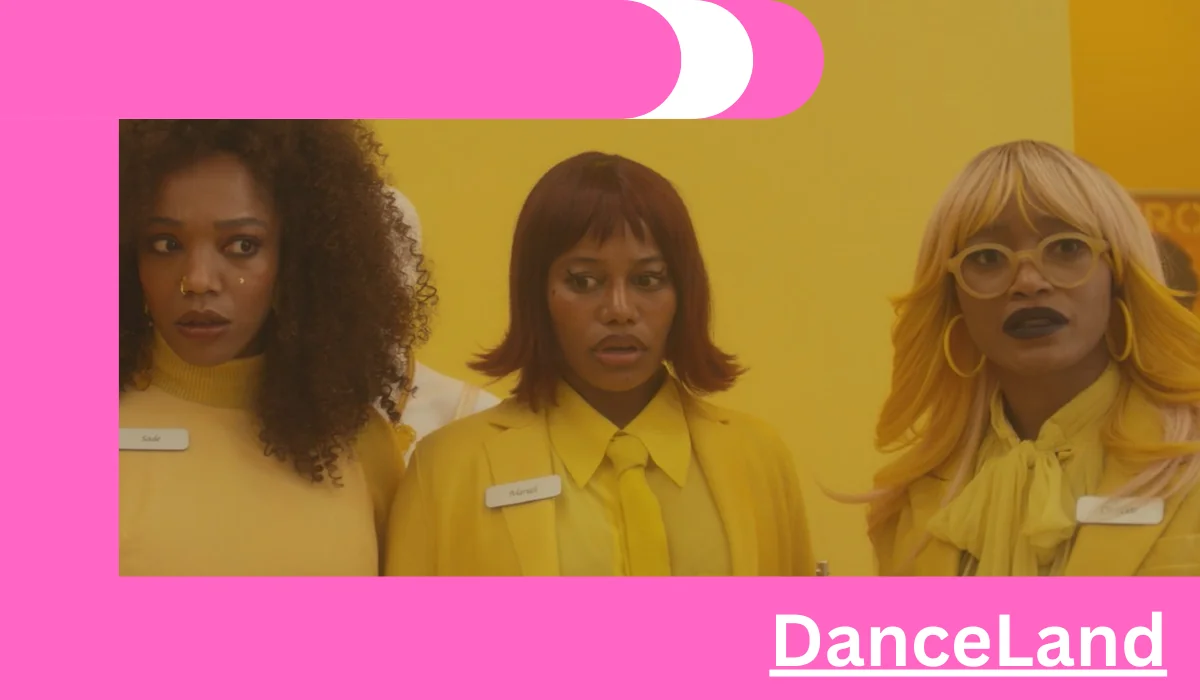
‘I Love Boosters’ boldly employs a vivid palette of lime greens, banana yellows, and hot pinks that invoke the energy of 90s rave scenes while also nodding to street art and pop culture. Production designer Christopher Glass and costume designer Shirley Kurata craft a universe that is both chaotic and vibrant, reflecting the chaotic state of a system on the brink of collapse yet bursting with rebellious energy.
The film’s tone is mischievous and playful, underpinned by Riley’s dark humor. Sight gags like employees crouched into starting blocks or Corvette’s teammate passing as white are delivered with a sharp comic timing that keeps the film from becoming too bleak despite its critique of grim realities.
As the narrative ventures into science fiction—introducing devices that manipulate or distort reality—it embraces absurdity with full gusto, culminating in sequences like a zanier-than-Carmageddon car chase and stop-motion animated characters, heightening the satirical impact with visual flair.
Performance and Direction
Keke Palmer provides a dynamic and charismatic performance as Corvette, bringing a combination of toughness, humor, and vulnerability. Her character’s rebellious spirit anchors the film’s message of resistance. Meanwhile, Demi Moore’s portrayal of Christie Smith offers a captivating parody of corporate narcissism and cultural appropriation, blending menace with a satirical edge.
Boots Riley’s direction is exuberant and unrestrained, matching the film’s eclectic aesthetic with a narrative that twists and turns unpredictably. His ability to maintain coherence amid chaos allows ‘I Love Boosters’ to serve as both a comedy and a pointed social critique, probing the contradictions and absurdities of capitalism.
Critical Reception and Impact
‘I Love Boosters’ has garnered attention for its bold visuals, inventive storytelling, and incisive satire. Critics praise it for balancing humor with serious commentary, offering a fresh perspective on issues like cultural theft, economic disparity, and corporate greed. Its over-the-top elements—such as the sci-fi gadgets and animated sequences—are seen not as distractions but as manifestations of Riley’s willingness to push artistic boundaries.
Though some viewers may find the film’s sprawling subplots and surreal detours challenging, many appreciate its unapologetic approach and message of hope through rebellion. It encourages audiences to imagine worlds beyond the confines of capitalist narratives and to consider how art and activism can collaborate to craft more equitable futures.
Conclusion
‘I Love Boosters’ stands out as a distinctive piece in contemporary satire—a film that refuses to temper its wildness in favor of neatness. With powerful performances by Keke Palmer and Demi Moore, combined with Riley’s inventive directorial vision, it delivers an energetic, visually stunning, and poignantly comic critique of systemic injustices. As it champions the idea that people are not merely the art crafted by oppressive systems but artists shaping their own destinies, the film invites viewers to question the status quo and embrace their capacity for creating change.
Frequently Asked Questions
What is the main message of ‘I Love Boosters’?
The film advocates for resistance against capitalism’s exploitative tendencies and encourages viewers to see themselves as active creators of their future rather than mere commodities or subjects of systemic control.
How does ‘I Love Boosters’ compare to Riley’s previous works?
Like ‘Sorry to Bother You,’ this film blends surreal humor with social critique, but it pushes further into sci-fi territory and employs more vibrant visual aesthetics, emphasizing chaos and creativity as ways to critique capitalism.
Is ‘I Love Boosters’ suitable for all audiences?
Given its R rating and complex themes, it is best suited for adult viewers interested in social satire, sci-fi, and experimental filmmaking. Its humor and imagery may be intense or provocative for more sensitive audiences.
Where can I watch ‘I Love Boosters’?
The film premiered at SXSW and is distributed by Neon. Keep an eye on streaming platforms or festival screenings for availability, as it may have limited theatrical or digital release windows initially.
‘I Love Boosters’ invites us to reimagine a world where art is created by the people, for the people, and where hope can flourish amidst chaos. It’s a bold statement wrapped in humor, visuals, and the audacity to challenge the status quo—an experience worth contemplating for anyone interested in cinema as a tool for change.