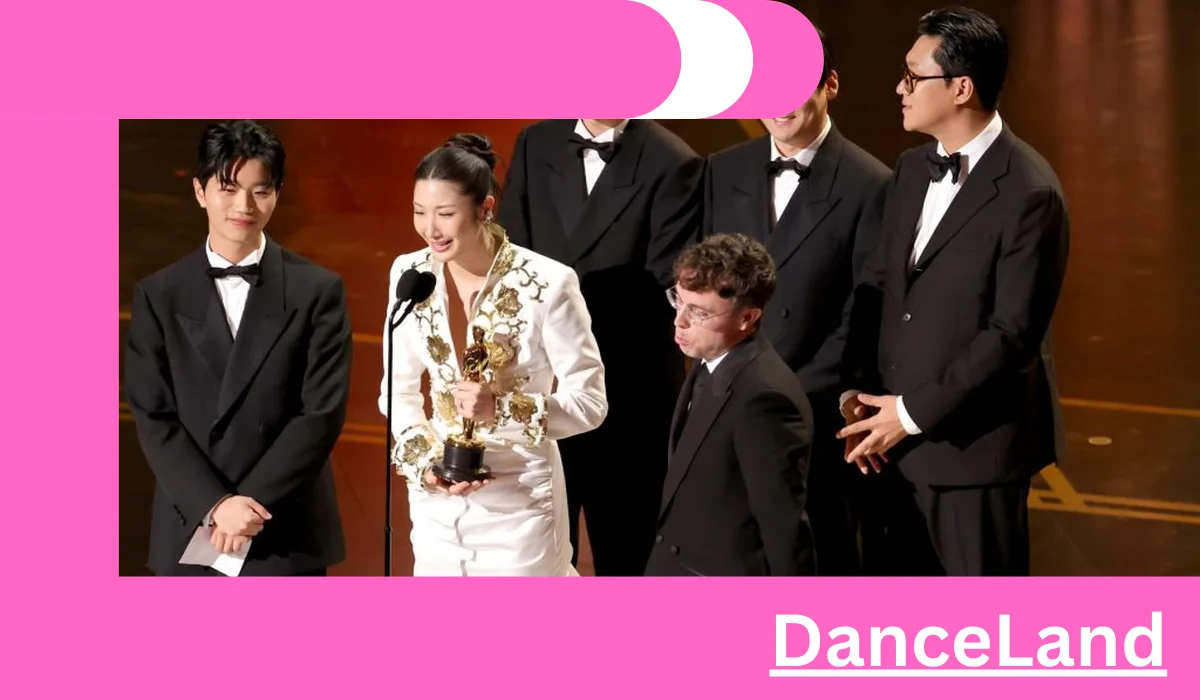
‘Golden’ from ‘KPop Demon Hunters’ Takes Best Original Song at 2026 Oscars, But Acceptance Speech Is Abruptly Ended

At the 2026 Oscars, a historic achievement was celebrated as ‘Golden’ from the animated film KPop Demon Hunters secured the award for Best Original Song. This victory marked a significant milestone not only for the film but also for the global reach of K-pop music on the Hollywood stage. However, the celebratory moment was marred by an unexpected interruption during the acceptance speech, drawing attention to the strict regulations surrounding Oscar award presentations and highlighting the unpredictable nature of live broadcasts.
The Significance of ‘Golden’’s Oscar Win
‘Golden’ made history by becoming the first K-pop song to win an Oscar, cementing its cultural impact and acknowledging the genre’s increasing prominence in mainstream Western media. The song’s six credited writers—EJAE, Joong Gyu Kwak, Yu-Han Lee, Hee Dong Nam, Jeong Hoon Seo, and Teddy Park—broke a long-standing record of the number of co-writers for a winning song, as previous winners generally had four or fewer credited creators. This collaborative effort demonstrated the global and multifaceted nature of contemporary music production.
Furthermore, ‘Golden’ achieved multiple honors, including wins at the Grammy Awards, Critics Choice Awards, and Golden Globes, confirming its widespread acclaim prior to Oscar recognition. Its victory at the Oscars also set new records:
- First K-pop song to win an Oscar for Best Original Song
- First song with more than four writers to win in this category
- First film song where all credited writers share the Oscar without each receiving an individual trophy
Beyond awards, ‘Golden’ broke several records on the Billboard charts, spending over eight weeks at number one—the third song in history to do so and the first since Eminem’s “Lose Yourself” in 2003 to win an Oscar.
The Award Ceremony and the Speech Controversy
The Emotional Acceptance
Upon receiving the award, EJAE delivered an emotionally charged speech emphasizing resilience and pride. She expressed gratitude toward the Academy, her family, colleagues, and fans, recounting her journey from facing criticism for her love of K-pop to standing triumphantly on the Oscar stage. Her speech highlighted the cultural significance of their achievement and underscored themes of persistence and cultural pride.
The Unexpected Interruption
As EJAE concluded her heartfelt remarks, she briefly acknowledged her collaborators, including Yu-Han Lee. At this moment, Lee stepped forward to thank the team, but the moment was abruptly cut off when loud music suddenly blared through the sound system, drowning out his voice. The live broadcast quickly shifted to a commercial break, leaving many viewers surprised and some viewers and media outlets questioning the abruptness of the interruption.
This incident underscored the strict adherence to rules by the Motion Picture Academy, which limits the number of statuettes awarded for a song and imposes time constraints on speeches. Specifically, the Academy’s rules state that no more than four writers can be awarded their own Oscar, or that all credited writers can share a single statuette, which was the case with ‘Golden’. The rules also aim to keep the ceremony within scheduled timeframes, leading to frequent use of music and other means to cut short speeches deemed too lengthy or unplanned.
Understanding the Academy’s Rules on Award Limitations
The strict regulations at the Oscars on award presentation stem from the need to manage the ceremony efficiently. The rules specify:
- Maximum of two statuettes routinely awarded in the category for songs with up to four writers.
- In cases with more than four writers, a single “group statuette” is issued if all agree beforehand through signing the appropriate document.
- Final decisions are made by the Music Branch Executive Committee, especially in rare cases with many collaborators.
With ‘Golden’ having seven credited writers, the group chose to accept a shared statuette. Despite this, live broadcast protocols meant the speech’s ending was cut short to prevent overrunning the scheduled program, leading to the abrupt halt of EJAE’s heartfelt tribute.
Cultural and Industry Impact of ‘Golden’’s Oscar Victory
The win for ‘Golden’ signals a continuing shift in the global music landscape. Historically, Hollywood awards largely recognized Western artists, but this victory highlights the increasingly significant role of Asian artists and genres in the international entertainment industry. The song’s victory at multiple high-profile awards underscores the growing acceptance and recognition of K-pop beyond Asian markets.
It also paves the way for further diversification at major awards and demonstrates the blending of cultural boundaries. The recognition of multiple South Korean songwriters, all of whom are the first from their country to win in this category, exemplifies this trend.
Conclusion
The 2026 Oscars’ awarding of ‘Golden’ from KPop Demon Hunters for Best Original Song signifies a historic moment for K-pop and international music on the Hollywood stage. While the victory was celebrated widely, the unexpected cut in EJAE’s emotional speech illustrated the tensions between live broadcasting constraints and the desire to celebrate artistic achievement fully. Nonetheless, the significance of the win extends far beyond the ceremony, marking a milestone in the ongoing globalization of entertainment and cultural exchange.
FAQs
Why was ‘Golden’ such a significant Oscar winner?
It was the first K-pop song to win an Oscar and set multiple records, including being the first with more than four credited writers and for its historical chart performance.
What was the reason for EJAE’s speech being cut short?
The live broadcast had to adhere to strict timing rules, and the ceremony’s producers used music and commercial breaks to manage the flow, which resulted in EJAE’s speech ending abruptly when the music was played over her co-writer.
How many writers are credited for ‘Golden’?
There are seven credited writers: EJAE, Joong Gyu Kwak, Yu-Han Lee, Hee Dong Nam, Jeong Hoon Seo, Teddy Park, and Mark Sonnenblick.
Will all the songwriters receive individual Oscars?
No. According to Oscar rules, in cases with more than four writers, the group can accept a shared statuette, but individual trophies are generally not awarded to each collaborator.