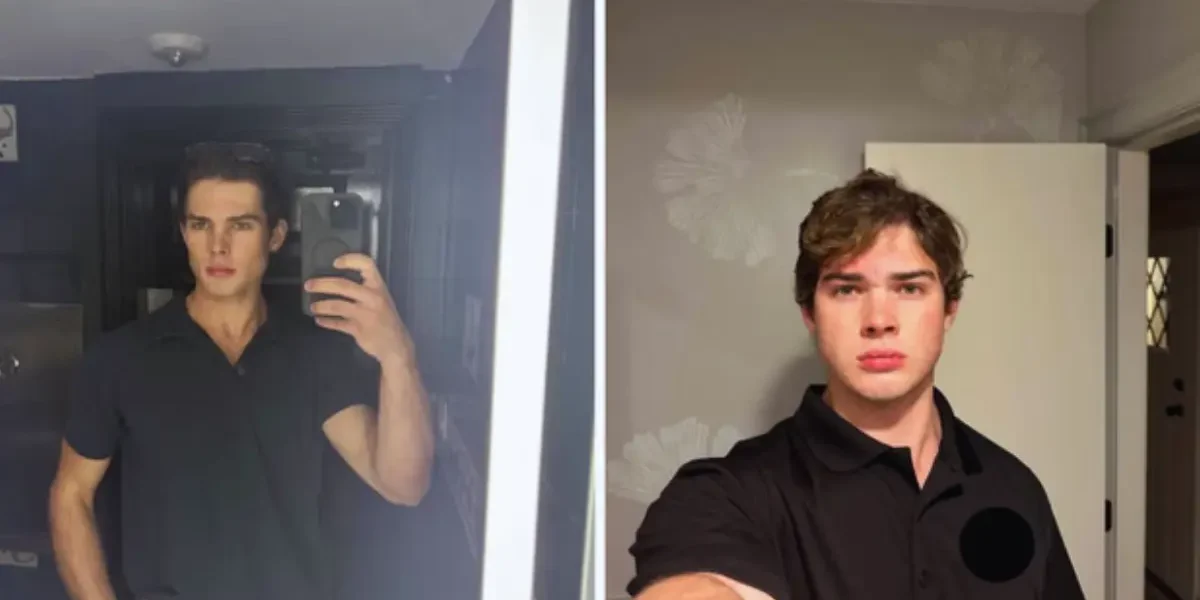
The Rise of Looksmaxxing: How Clavicular Became the Face of Extreme Male Beauty Culture

Tempe, Arizona – February 2026 — In a small streaming studio lit by ring lights and camera rigs, 20-year-old Braden Peters, better known online as “Clavicular,” measures his face with scientific precision.
He can recite his body statistics from memory: 6-foot-2, 180 pounds, 31-inch waist. His clavicle span — known as biacromial width — measures 19.5 inches. He tracks facial ratios like midface proportion and chin-to-philtrum distance with the same seriousness professional athletes track performance metrics.
To his growing online audience, these numbers represent something powerful: proof of attractiveness.
Clavicular is one of the most visible figures in the rising world of “looksmaxxing,” an internet-driven movement that treats male physical perfection as a pathway to status, wealth, and influence.
What Is Looksmaxxing?
Looksmaxxing is an online subculture focused on maximizing physical attractiveness through fitness, grooming, fashion, skincare, and sometimes medical procedures. The philosophy is simple: appearance determines opportunity.
Within these online communities, men analyze bone structure, jaw alignment, shoulder width, facial symmetry, and body fat percentages. Scientific terms like “midface ratio” and “facial harmony” are common discussion points.
For some, it begins with gym routines and skincare. For others, it moves toward cosmetic procedures such as jaw surgery or fillers.
Clavicular represents the movement’s extreme end.
The Metrics of Masculine Beauty
Unlike traditional influencers who focus on lifestyle aesthetics, Clavicular approaches beauty like a data analyst.
He calculates facial ratios based on symmetry formulas often referenced in cosmetic surgery discussions. He compares his measurements to actors and models widely viewed as conventionally attractive.
One benchmark he frequently mentions is Matt Bomer, whose facial proportions are often cited in online forums as an example of “ideal male harmony.”
Clavicular openly discusses the possibility of undergoing bimaxillary osteotomy — commonly known as double jaw surgery — to further refine his facial structure. The procedure, typically performed for medical reasons such as jaw misalignment, has also become popular in cosmetic enhancement circles.
For him, improvement is never complete.
Why Young Men Are Drawn to Looksmaxxing
The looksmaxxing trend has gained traction among young men navigating a competitive digital world. Social media platforms amplify beauty standards and reward visual appeal with likes, followers, and sponsorships.
Psychologists note that constant exposure to idealized images can heighten self-scrutiny. Fitness culture, influencer marketing, and algorithm-driven feeds often reinforce the message that physical perfection leads to success.
For many followers, looksmaxxing offers structure. It provides measurable goals — body fat percentages, shoulder width targets, facial symmetry markers — that feel achievable through discipline.
Clavicular frames it as self-improvement rather than vanity.
The Fine Line Between Self-Optimization and Obsession
Experts caution that while self-care and fitness are healthy pursuits, obsessive measurement of physical features can harm mental well-being.
Cosmetic surgeons report increased inquiries from young men seeking procedures once primarily requested by women. Jawline enhancements, chin implants, and rhinoplasty consultations have risen in recent years.
Mental health professionals warn that extreme focus on perceived flaws can lead to body dysmorphia, anxiety, and social withdrawal.
In some online spaces, looksmaxxing overlaps with more toxic ideologies that tie physical appearance to self-worth or social hierarchy. However, mainstream influencers like Clavicular often distance themselves from those darker corners of the internet.
He positions himself as disciplined, not resentful.
The Business of Beauty Metrics
Clavicular’s popularity is not accidental. His streams attract viewers fascinated by transformation content, fitness routines, and detailed facial analysis.
The broader male grooming industry has expanded significantly over the past decade. Skincare, cosmetic treatments, hair restoration, and aesthetic dentistry are no longer marketed exclusively to women.
Brands increasingly target men seeking sharper jawlines, clearer skin, and broader physiques. Social media influencers play a major role in shaping that demand.
By turning facial symmetry into content, Clavicular has built both a following and a brand.
A Cultural Shift in Masculinity
Traditional masculinity once discouraged men from openly discussing appearance. Today, self-presentation is central to digital identity.
Young men curate their image as carefully as influencers curate feeds. Gym transformations, skincare routines, and fashion hauls are common content formats.
Looksmaxxing reflects this cultural shift. It merges fitness culture with cosmetic science and algorithm-driven visibility.
Supporters argue that striving to look better builds confidence. Critics say the constant pursuit of “optimization” risks creating unrealistic standards that are impossible to sustain.
What Comes Next?
Clavicular has expressed interest in taking looksmaxxing further into mainstream conversation. He presents himself not as extreme, but as ahead of the curve.
Whether through surgery or continued training, he sees refinement as progress.
But his rise also signals something larger: a generation of young men grappling with appearance in a hyper-visual world.
As social media continues to reward symmetry and aesthetics, the line between self-improvement and self-critique may become harder to see.
For now, Clavicular remains both a symbol and a warning — proof of how far beauty culture has expanded into male identity, and how measurable attractiveness has become in the age of algorithms.